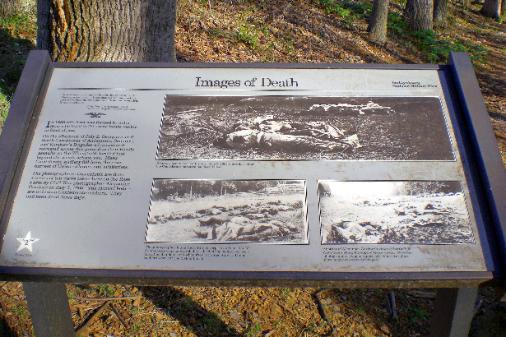
| More men died in the Civil War than any other American conflict, and two-thirds of the dead perished from disease. Approximately 625,000 men died in the Civil War, more Americans than in World War I, World War II, the Korean War and the Vietnam War combined. If the names of the Civil War dead were arranged like the names on the Vietnam Memorial, it would stretch over 10 times the wall’s length. Two percent of the population died, the equivalent of 6 million men today. Rifles were by far the war’s deadliest weapons, but deadlier still was disease. In 1861, as armies massed, men once protected from contagion by isolation marched shoulder to shoulder and slept side by side in unventilated tents. Camps became breeding grounds for childhood diseases such as mumps, chicken pox and measles. One million Union soldiers contracted malaria, and epidemics were common. |
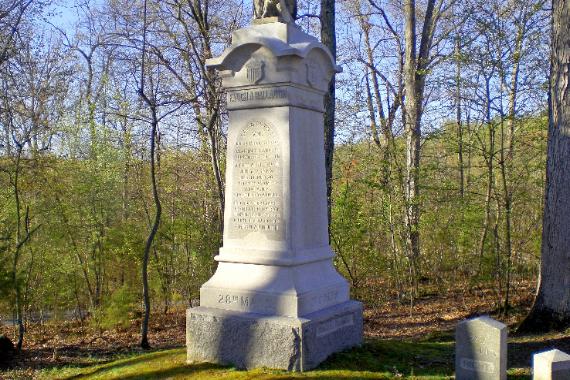
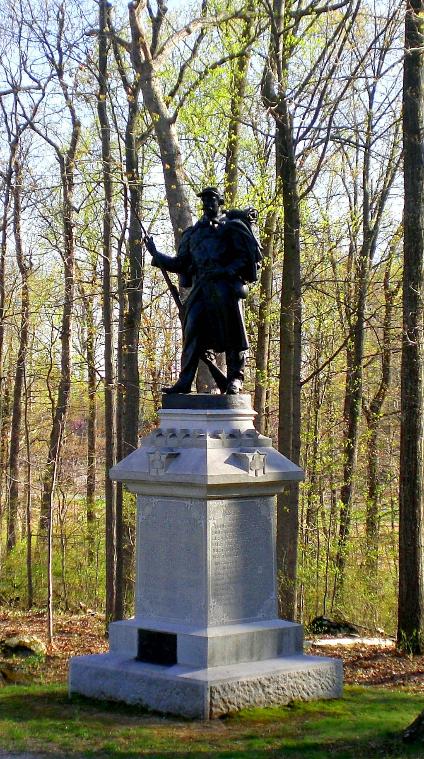
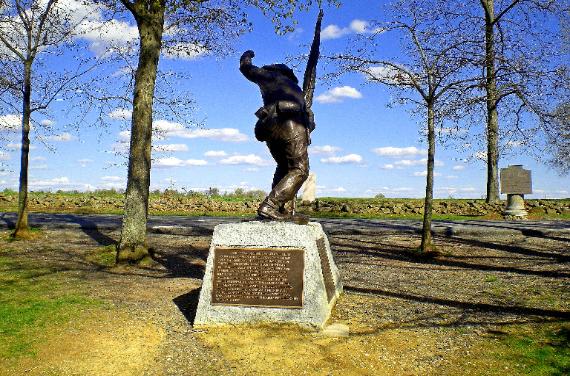
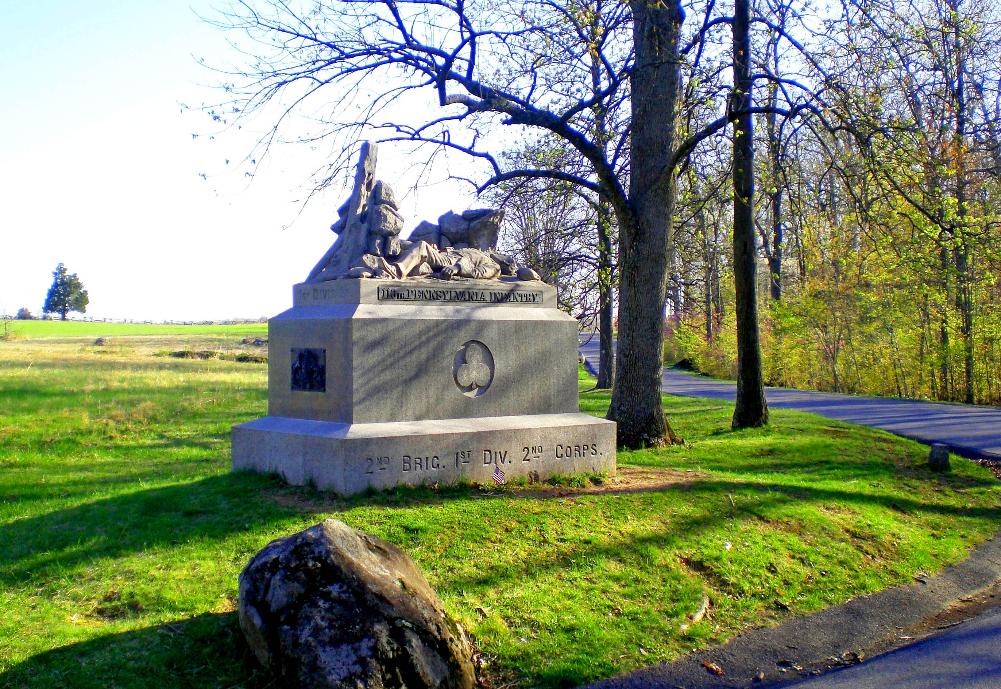
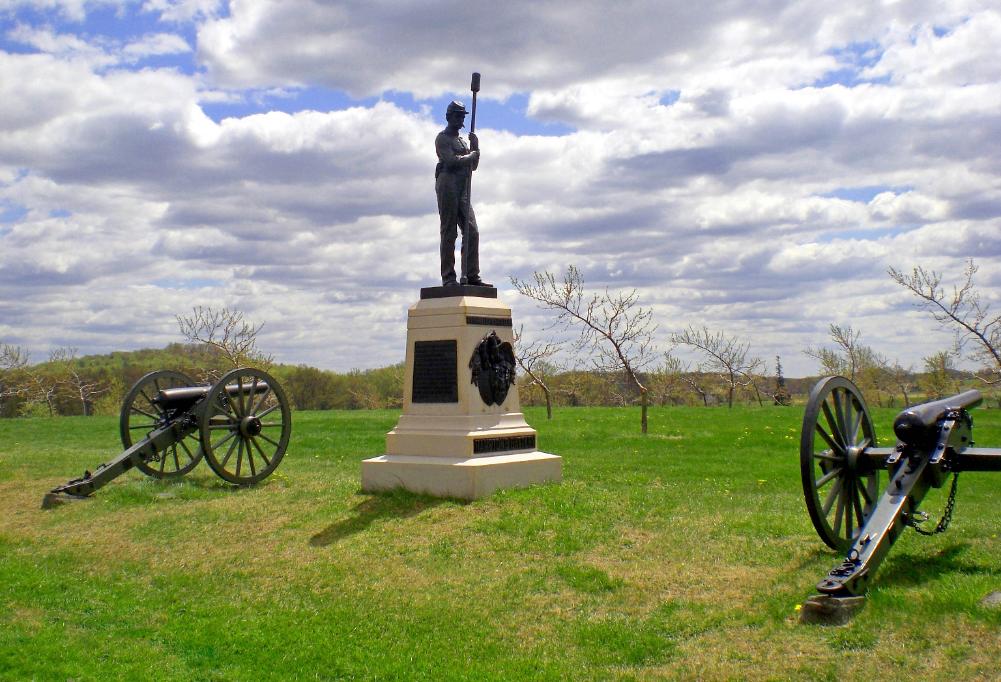
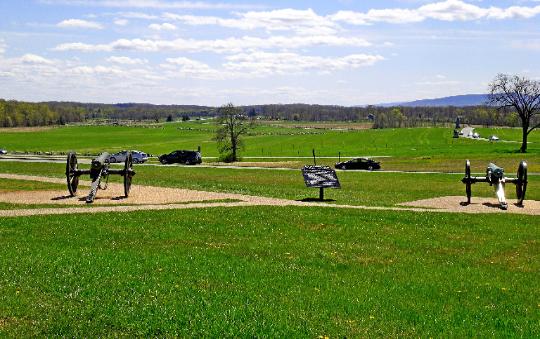
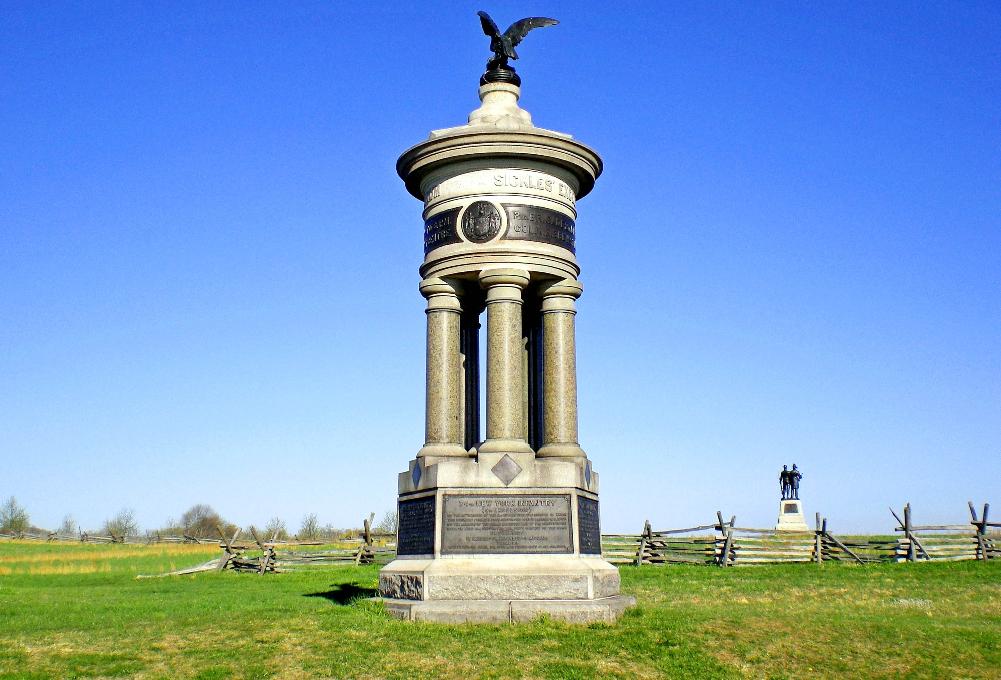
| Peach Orchard New York Excelsior Brigade Dedicated in 1893 |
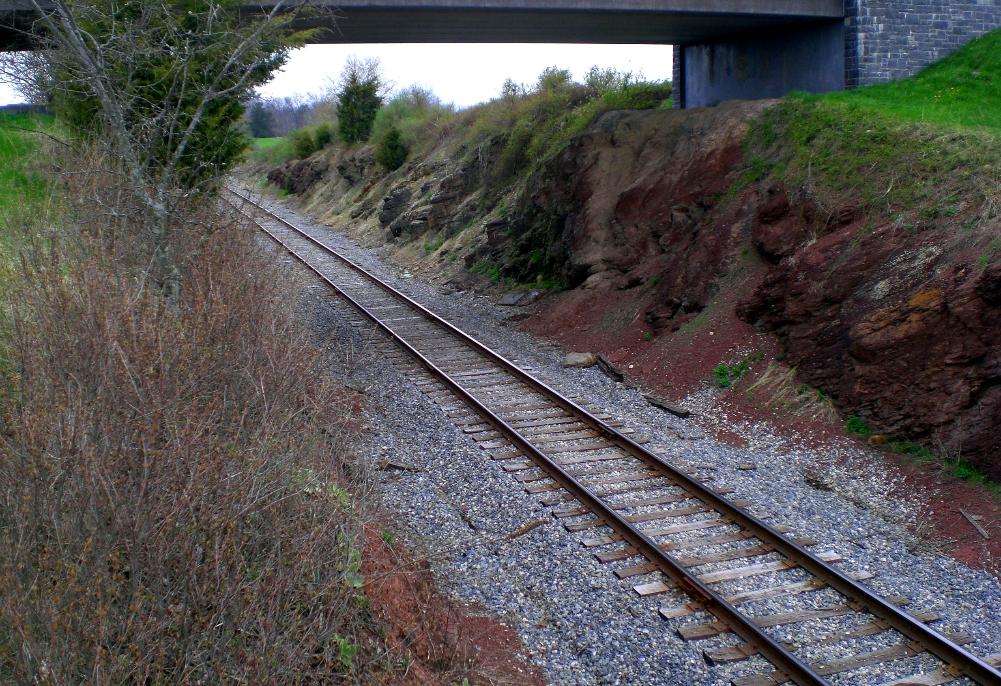
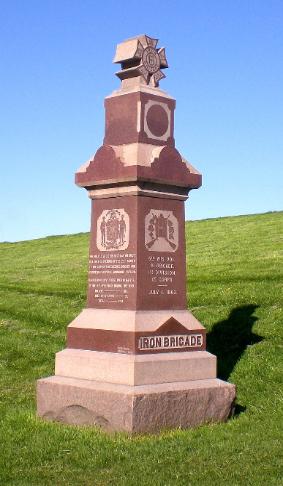
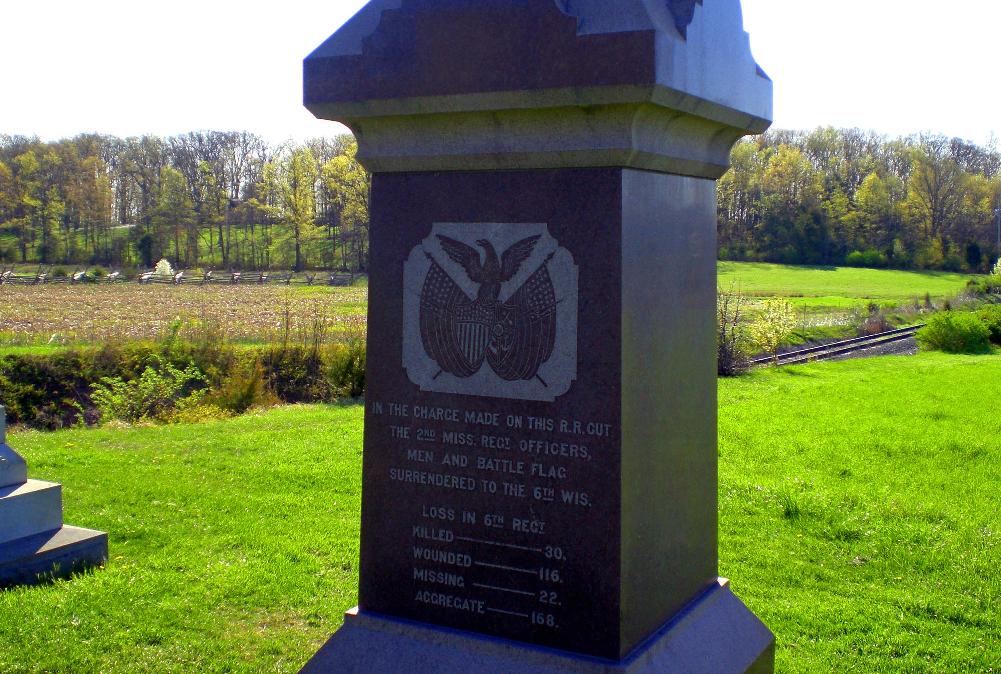
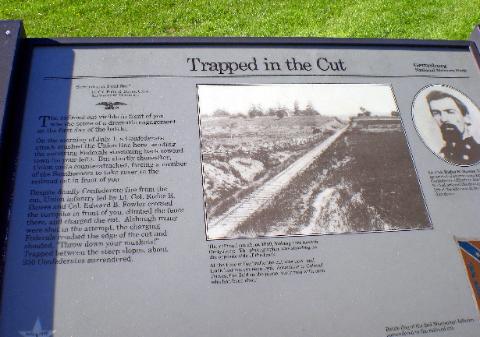
| RAILROAD CUT At around 11 a.m., Major General Abner Doubleday, yes, the one who is credited with inventing baseball, sent his reserve regiment, the 6th Wisconsin, an Iron Brigade regiment, commanded by Lt. Col. Rufus R. Dawes, north in the direction of Davis's disorganized brigade. The Wisconsin men paused at the fence along the pike and fired, which halted Davis's attack on Cutler's men and caused many of them to seek cover in the unfinished railroad cut. The 6th joined the 95th New York and the 84th New York (also known as the 14th Brooklyn), a "demi- brigade" commanded by Col. E.B. Fowler, along the pike. The three regiments charged to the railroad cut, where Davis's men were seeking cover. The majority of the 600-foot cut was too deep to be an effective firing position—as deep as 15 feet. Making the situation more difficult was the absence of their overall commander, General Davis, whose location was unknown. The men of the three regiments nevertheless faced daunting fire as they charged toward the cut. The 6th Wisconsin's American flag went down at least three times during the charge. At one point Dawes took up the fallen flag before it was seized from him by a corporal of the color guard. As the Union line neared the Confederates, its flanks became folded back and it took on the appearance of an inverted V. When the Union men reached the railroad cut, vicious hand-to-hand and bayonet fighting broke out. They were able to pour enfilading fire from both ends of the cut, and many Confederates considered surrender. Colonel Dawes took the initiative by shouting "Where is the colonel of this regiment?" Major John Blair of the 2nd Mississippi stood up and responded, "Who are you?" Dawes replied, "I command this regiment. Surrender or I will fire." Dawes later described what happened next: The officer replied not a word, but promptly handed me his sword, and his men, who still held them, threw down their muskets. The coolness, self possession, and discipline which held back our men from pouring a general volley saved a hundred lives of the enemy, and as my mind goes back to the fearful excitement of the moment, I marvel at it. — Col. Rufus R. Dawes, Service with the Sixth Wisconsin Volunteers (1890, p. 169) Despite this surrender, leaving Dawes standing awkwardly holding seven swords, the fighting continued for minutes more and numerous Confederates were able to escape back to Herr Ridge. The three Union regiments lost 390–440 of 1,184 engaged, but they had blunted Davis's attack, prevented them from striking the rear of the Iron Brigade, and so overwhelmed the Confederate brigade that it was unable to participate significantly in combat for the rest of the day. The Confederate losses were about 500 killed and wounded and over 200 prisoners out of 1,707 engaged. |


| All rights reserved. |

| GETTYSBURG |


| ALL PHOTOGRAPHS TAKEN BY DOUGLAS HANEY ALL PHOTGRAPHS ARE PROTECTED BY COPYRIGHT ALL RIGHTS RESERVED - COPYRIGHT © 2015 - DOUGLAS HANEY PHOTOGRAPHY |
| AMERICA'S HALLOWED GROUND |
| RAILROAD CUT |
| 14th New York State Militia Dedicated in 1887 |

| Peach Orchard Hampton's Battery F, PA Light Artillery Organized in Pittsburgh - Dedicated in 1890 |
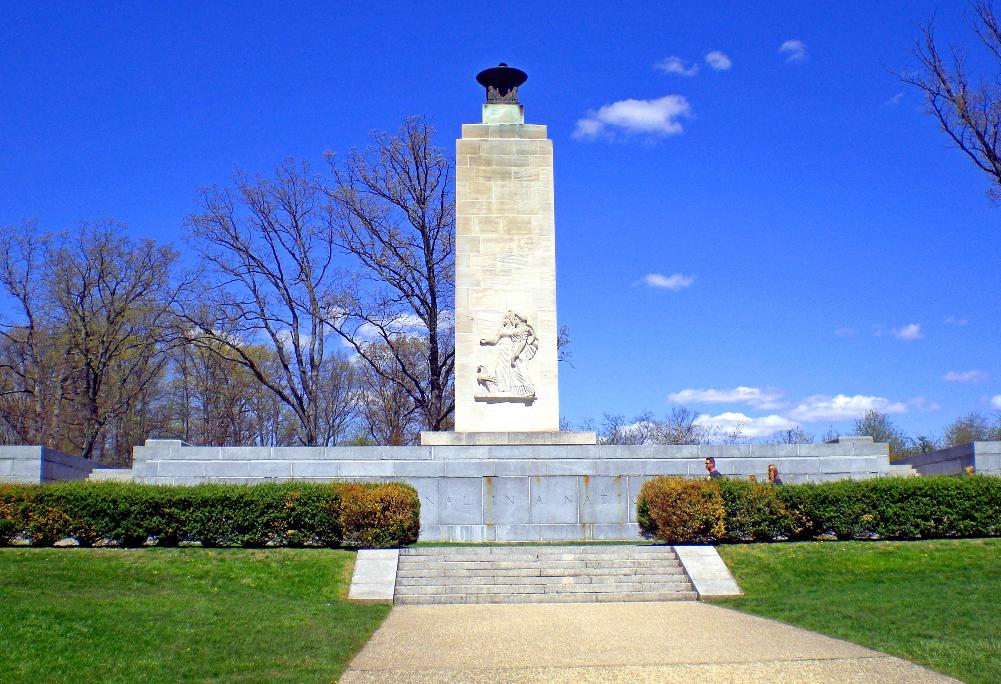
| Eternal Peace Light Memorial ...We Can Dream Right? |
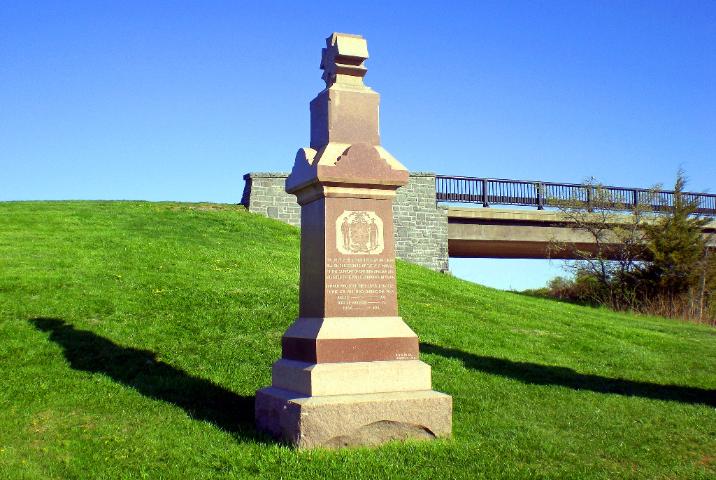
| 6th Wisconsin (Iron Brigade) Monument |
| Railroad Cut Became a Trap for a CSA Regiment |
| Rose Farm Woods 116th PA Infantry Dedicated in 1889 |
| Oak Hill CSA Artillery Overlooks McPherson Ridge and the Town to the Left |
| 28th Massachusetts Volunteer Infantry Monument |
| Rose Farm Woods 118th PA Infantry |
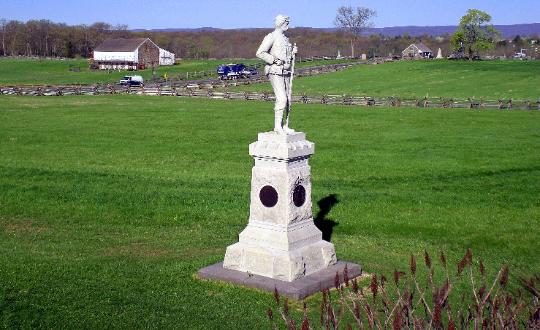
| Oak Ridge 90th PA Dedicated in 1888 |
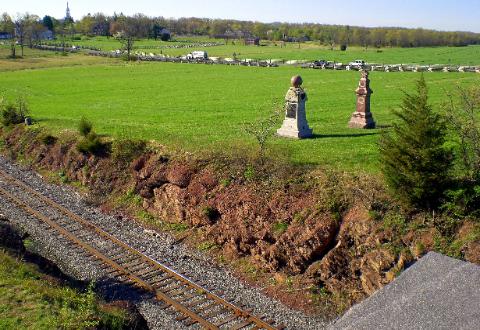
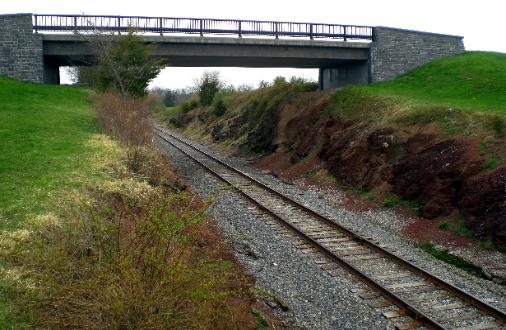
| Iron Brigade and 95th New York Charge Across this Field to Trap CSA Regiment in the Cut The Tracks Had Not Been Laid Yet During the Battle |
| 11th Mississippi Monument |