| John Hancock January 23, 1737 - October 8, 1793 Was a merchant, statesman, and prominent Patriot of the American Revolution. He served as president of the Second Continental Congress and was the first and third Governor of the Commonwealth of Massachusetts. He is remembered for his large and stylish signature on the United States Declaration of Independence, so much so that the term "John Hancock" became, in the United States, a synonym for signature. Hancock was one of Boston's leaders during the crisis that led to the outbreak of the American Revolutionary War in 1775. He served more than two years in the Continental Congress in Philadelphia, and as president of Congress, was the first to sign the Declaration of Independence. Hancock returned to Massachusetts and was elected governor of the Commonwealth, serving in that role for most of his remaining years. He used his influence to ensure that Massachusetts ratified the United States Constitution in 1788. |
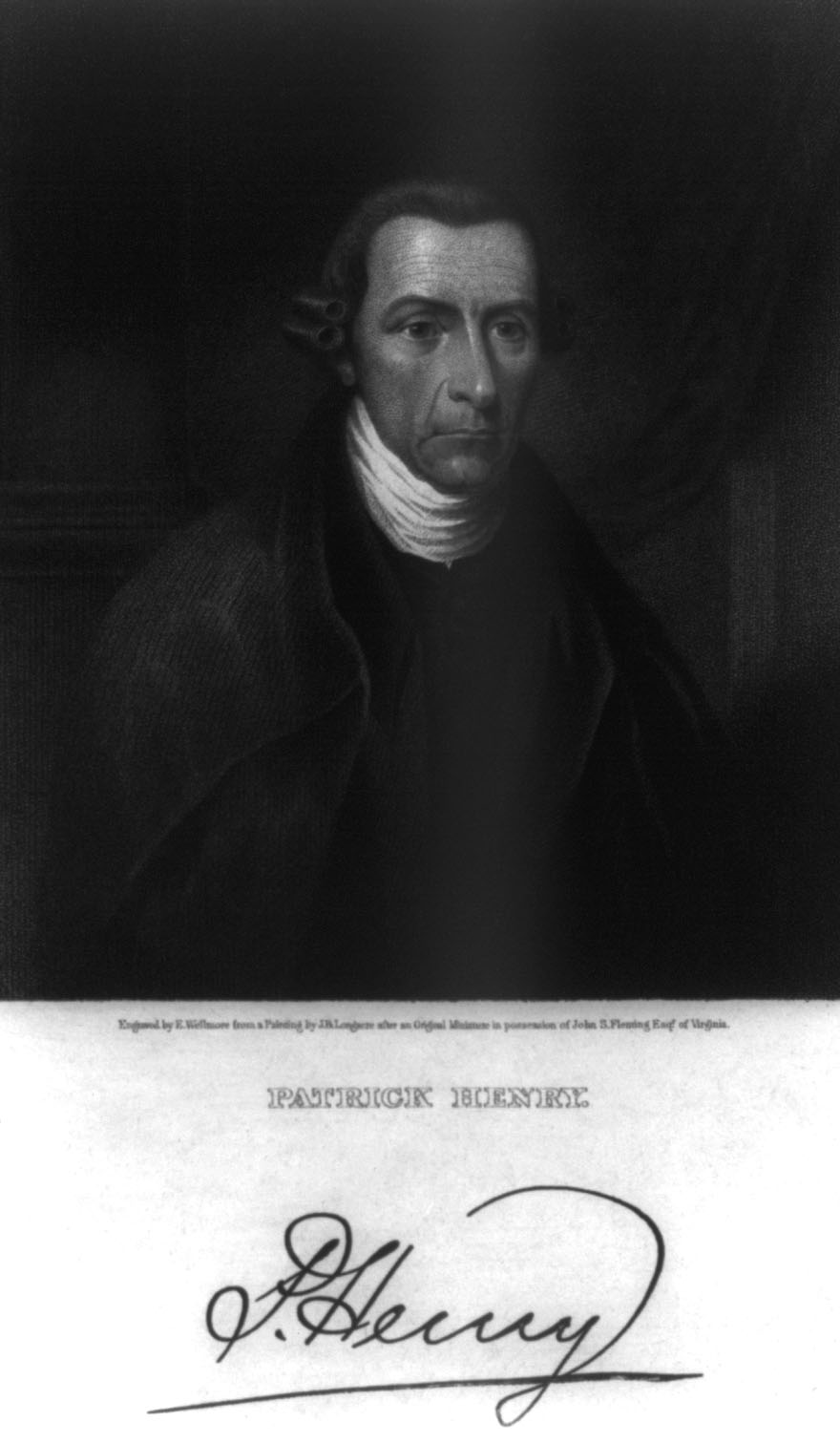
| Patrick Henry May 29, 1736 - June 6, 1799 Was an attorney, planter and politician who became known as an orator during the movement for independence in Virginia in the 1770s. A Founding Father, he served as the first and sixth post-colonial Governor of Virginia, from 1776 to 1779 and from 1784 to 1786.Henry led the opposition to the Stamp Act of 1765 and is remembered for his "Give me Liberty, or give me Death!" speech. Along with Samuel Adams and Thomas Paine, he is regarded as one of the most influential champions of Republicanism and an invested promoter of the American Revolution and its fight for independence. |
| FAMOUS & INFAMOUS AMERICANS |

| ABOUT THESE PHOTOS: These Photos Have Been Restored to Their Original Brillance by the SteelCactus Foundation. |

Photo Antiquities Museum of Pittsburg
| 531 East Ohio Street Pittsburgh, PA 15212 (412) 231-7881 |
| THE ONLY MUSEUM LIKE IT IN THE U.S.! |
See photos like this in their original form!
Plus the largest collection of cameras anywhere!
Plus the largest collection of cameras anywhere!


| Oliver Wendell Holmes, Jr. March 8, 1841 - March 6, 1935 Was an American jurist who served as an Associate Justice of the Supreme Court of the United States from 1902 to 1932. Noted for his long service, his concise and pithy opinions and his deference to the decisions of elected legislatures, he is one of the most widely cited United States Supreme Court justices in history, particularly for his "clear and present danger" majority opinion in the 1919 case of Schenck v. United States, and is one of the most influential American common law judges through his outspoken judicial restraint philosophy. Holmes retired from the Court at the age of 90 years, 309 days, making him the oldest Justice in the Supreme Court's history. He also served as an Associate Justice and as Chief Justice on the Massachusetts Supreme Judicial Court, and was Weld Professor of Law at the Harvard Law School, of which he was an alumnus. |
| Sam Houston March 2, 1793 - July 26, 1863 Was a nineteenth-century American statesman, politician, and soldier. He is best known for his leading role in bringing Texas into the United States. He was born in Timber Ridge in the Shenandoah Valley of Virginia, of Scots-Irish descent. Houston became a key figure in the history of Texas and was elected as the first and third President of the Republic of Texas, U.S. Senator for Texas after it joined the United States, and finally as a governor of the state. He refused to swear loyalty to the Confederacy when Texas seceded from the Union in 1861 with the outbreak of the American Civil War, and was removed from office. To avoid bloodshed, he refused an offer of a Union army to put down the Confederate rebellion. Instead, he retired to Huntsville, Texas, where he died before the end of the Civil War. |
| Washington Irving April 3, 1783 - November 28, 1859 Was an American author, essayist, biographer, historian, and diplomat of the early 19th century. He is best known for his short stories "The Legend of Sleepy Hollow" and "Rip Van Winkle", both of which appear in his book The Sketch Book of Geoffrey Crayon, Gent. His historical works include biographies of George Washington, Oliver Goldsmith and Muhammad, and several histories of 15th-century Spain dealing with subjects such as Christopher Columbus, the Moors, and the Alhambra. Irving served as the U.S. ambassador to Spain from 1842 to 1846. |