
| Carrie A. Nation November 25, 1846 – June 9, 1911 Was a radical member of the temperance movement, which opposed alcohol in pre-Prohibition America. She is particularly noteworthy for promoting her viewpoint through vandalism. Nation frequently attacked the property of alcohol-serving establishments (most often taverns) with a hatchet. Recently, Nation's behavior has inspired fiction writers as well as an opera composer. Nation was a relatively large woman, almost 6 feet tall and weighing 175 pounds with a stern countenance. She described herself as "a bulldog running along at the feet of Jesus, barking at what He doesn't like," and claimed a divine ordination to promote temperance by destroying bars. |
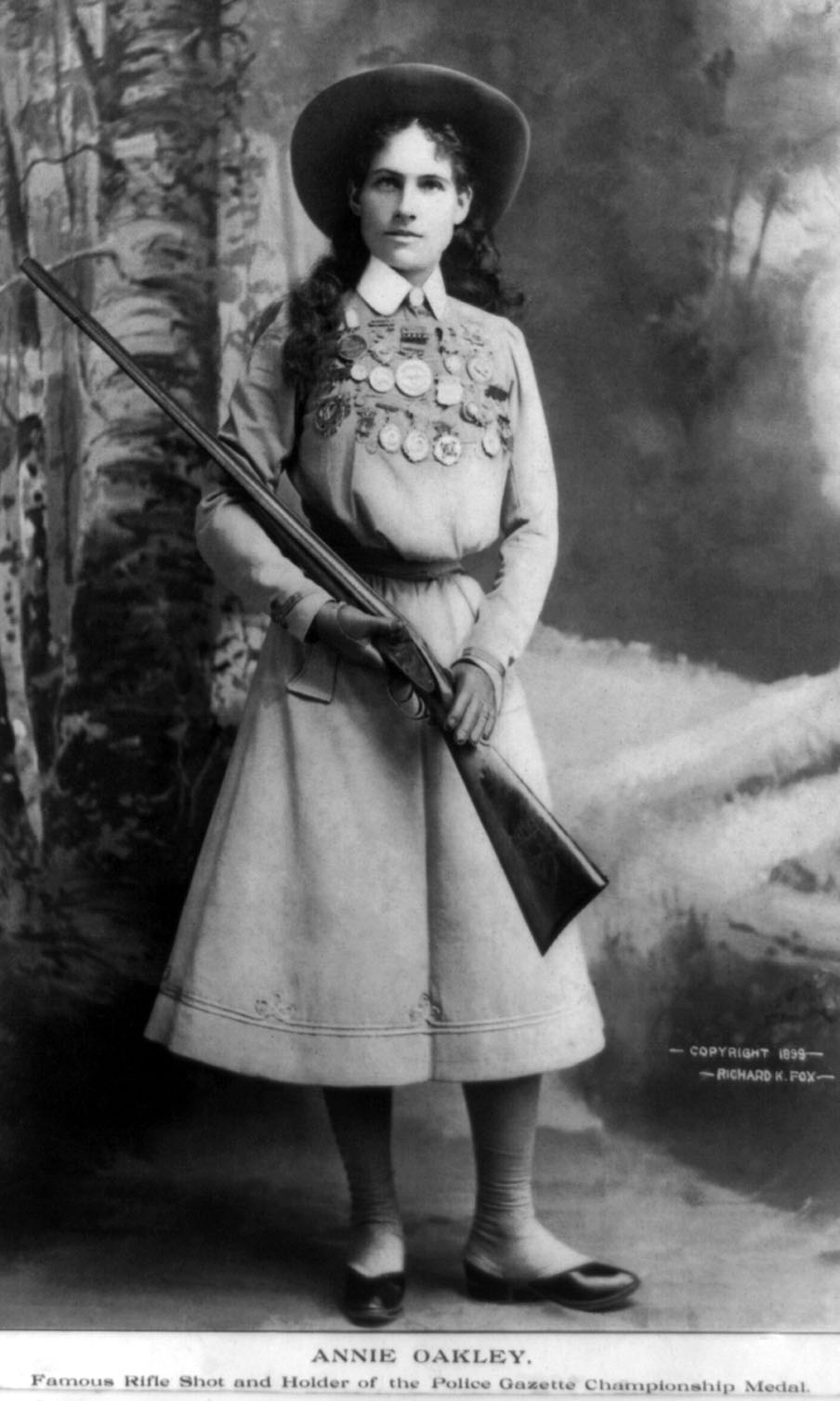
| Annie Oakley August 13, 1860 – November 3, 1926 Born Phoebe Ann Moses Was an American sharpshooter and exhibition shooter. Oakley's amazing talent and timely rise to fame led to a starring role in Buffalo Bill's Wild West show, which propelled her to become the first American female superstar. Oakley's perhaps most famous trick is being able to repeatedly split a playing card, edge-on, and put several more holes in it before it could touch the ground, while using a .22 caliber rifle, at 90 feet. |
| FAMOUS & INFAMOUS AMERICANS |

| ABOUT THESE PHOTOS: These Photos Have Been Restored to Their Original Brillance by the SteelCactus Foundation. |

Photo Antiquities Museum of Pittsburg
| 531 East Ohio Street Pittsburgh, PA 15212 (412) 231-7881 |
| THE ONLY MUSEUM LIKE IT IN THE U.S.! |
See photos like this in their original form!
Plus the largest collection of cameras anywhere!
Plus the largest collection of cameras anywhere!


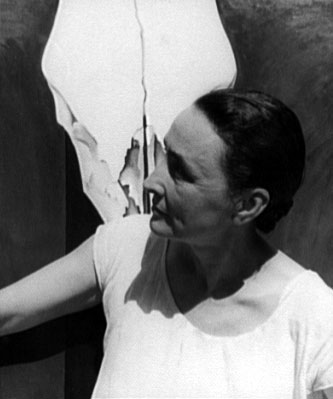
| Georgia O'Keeffe November 15, 1887 – March 6, 1986 Was an American artist. Born near Sun Prairie, Wisconsin, O'Keeffe first came to the attention of the New York art community in 1916. She made large- format paintings of enlarged blossoms, presenting them close up as if seen through a magnifying lens, and New York buildings, most of which date from the same decade. Beginning in 1929, when she began working part of the year in Northern New Mexico—which she made her permanent home in 1949— O’Keeffe depicted subjects specific to that area. O'Keeffe has been recognized as the Mother of American Modernism. In 1962, O'Keeffe was elected to the fifty-member American Academy of Arts and Letters. She was elected a Fellow of the American Academy of Arts and Sciences in 1966.[25] In the fall of 1970, the Whitney Museum of American Art mounted the Georgia O'Keeffe Retrospective Exhibition, the first retrospective exhibition of her work in New York since 1946. This exhibit did much to revive her public career. |
| Jesse Owens September 12, 1913 – March 31, 1980 Was an American track and field athlete who specialized in the sprints and the long jump. He participated in the 1936 Summer Olympics in Berlin, Germany, where he achieved international fame by winning four gold medals: one each in the 100 meters, the 200 meters, the long jump, and as part of the 4x100 meter relay team. He was the most successful athlete at the 1936 Summer Olympics. The Jesse Owens Award, USA Track and Field's highest accolade for the year's best track and field athlete, is named after him, in honor of his significant career. In 1936, Owens arrived in Berlin to compete for the United States in the Summer Olympics. Adolf Hitler was using the games to show the world a resurgent Nazi Germany. Hitler had high hopes that German athletes would dominate the games but it was Owens who dominated winning four gold medals. |
| Rosa Parks February 4, 1913 – October 24, 2005 Was an African-American civil rights activist, whom the U.S. Congress called "the first lady of civil rights" and "the mother of the freedom movement". On December 1, 1955, in Montgomery, Alabama, Parks refused to obey bus driver James F. Blake's order that she give up her seat in the colored section to a white passenger, after the white section was filled. Parks' act of defiance and the Montgomery Bus Boycott became important symbols of the modern Civil Rights Movement. She became an international icon of resistance to racial segregation. She organized and collaborated with civil rights leaders, including Edgar Nixon, president of the local chapter of the NAACP; and Dr. Martin Luther King, Jr., a new minister in town who gained national prominence in the civil rights movement. Parks received national recognition, including the NAACP's 1979 Spingarn Medal, the Presidential Medal of Freedom, the Congressional Gold Medal, and a posthumous statue in the United States Capitol's National Statuary Hall. Upon her death in 2005, she was the first woman and second non-U.S. government official to lie in honor at the Capitol Rotunda. |