| Mark Twain Samuel Langhorne Clemens November 30, 1835 – April 21, 1910 Better known by his pen name Mark Twain, was an American author and humorist. He wrote The Adventures of Tom Sawyer (1876) and its sequel, Adventures of Huckleberry Finn (1885), the latter often called "the Great American Novel." Twain grew up in Hannibal, Missouri, which provided the setting for Huckleberry Finn and Tom Sawyer. After an apprenticeship with a printer, he worked as a typesetter and contributed articles to his older brother Orion's newspaper. He later became a riverboat pilot on the Mississippi River before heading west to join Orion in Nevada. He referred humorously to his singular lack of success at mining, turning to journalism for the Virginia City Territorial Enterprise.In 1865, his humorous story, "The Celebrated Jumping Frog of Calaveras County" was published, based on a story he heard at Angels Hotel in Angels Camp California where he had spent some time as a miner. The short story brought international attention, even being translated to classic Greek. His wit and satire, in prose and in speech, earned praise from critics and peers, and he was a friend to presidents, artists, industrialists, and European royalty. |

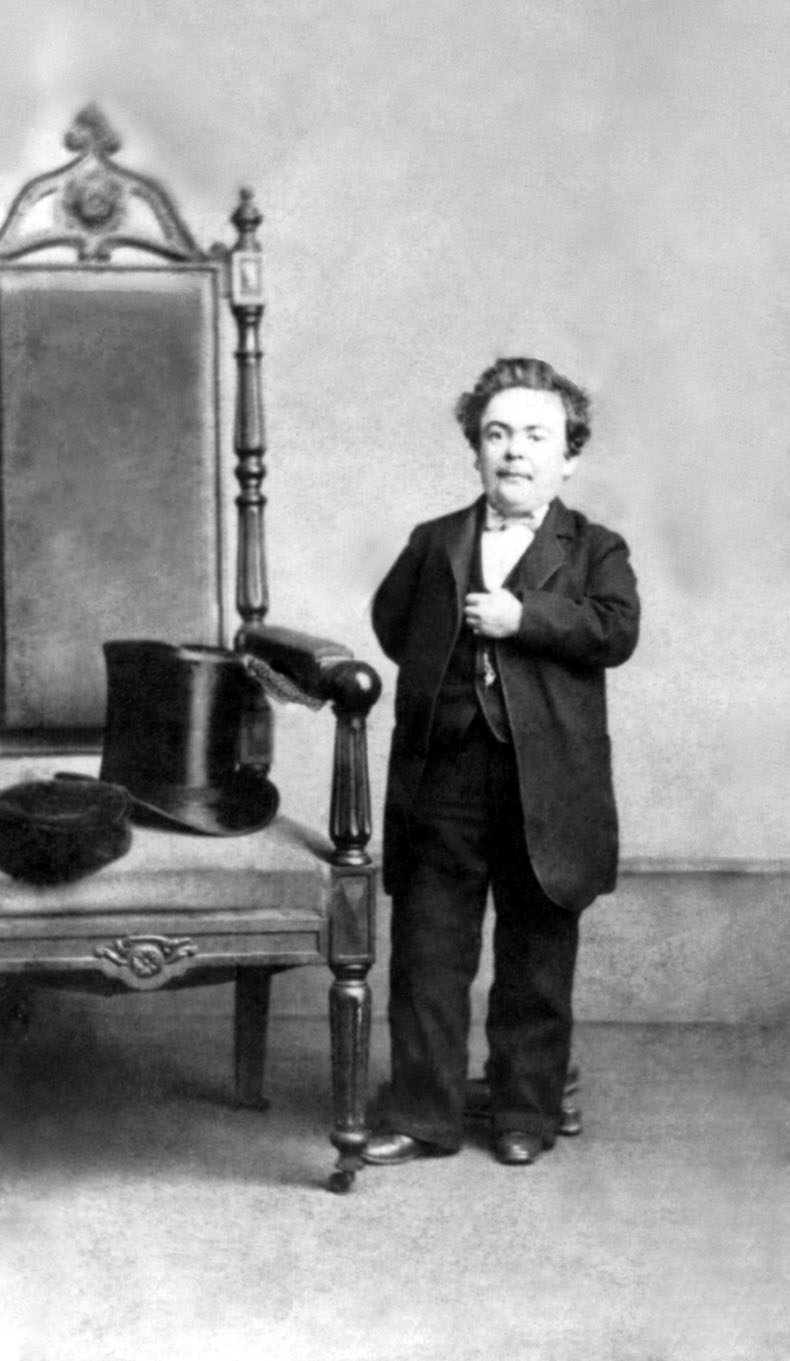
| General Tom Thumb General Tom Thumb was the stage name of Charles Sherwood Stratton January 4, 1838 – July 15, 1883 A little person who achieved great fame under circus pioneer P.T. Barnum. P.T. Barnum, a distant relative, heard about Stratton and taught the boy how to sing, dance, mime, and impersonate famous people. Stratton made his first tour of America at the age of five, with routines that included impersonating characters such as Cupid and Napoleon Bonaparte as well as singing, dancing and comical banter with another performer who acted as a straight man. It was a huge success and the tour expanded. A year later, Barnum took young Stratton on a tour of Europe making him an international celebrity. Stratton appeared twice before Queen Victoria. He also met the three-year-old Prince of Wales, who would become King Edward VII. The tour was a huge success, with crowds mobbing him wherever he went. On his return home from his second tour in 1847, he attracted the attention of the explorer John Palliser who "was not a little surprised, on entering the state-cabin, to hear the most unnatural shrill little pipe exclaiming, “Waiter! bwing me a Welsh wabbit⠀�. In 1847 he started to grow for the first time since the first few months of his life, but with extreme slowness. In January 1851 Stratton stood exactly 2 feet 5 inches tall. On his 18th birthday, he was measured at 2 feet 8.5 inches tall. |

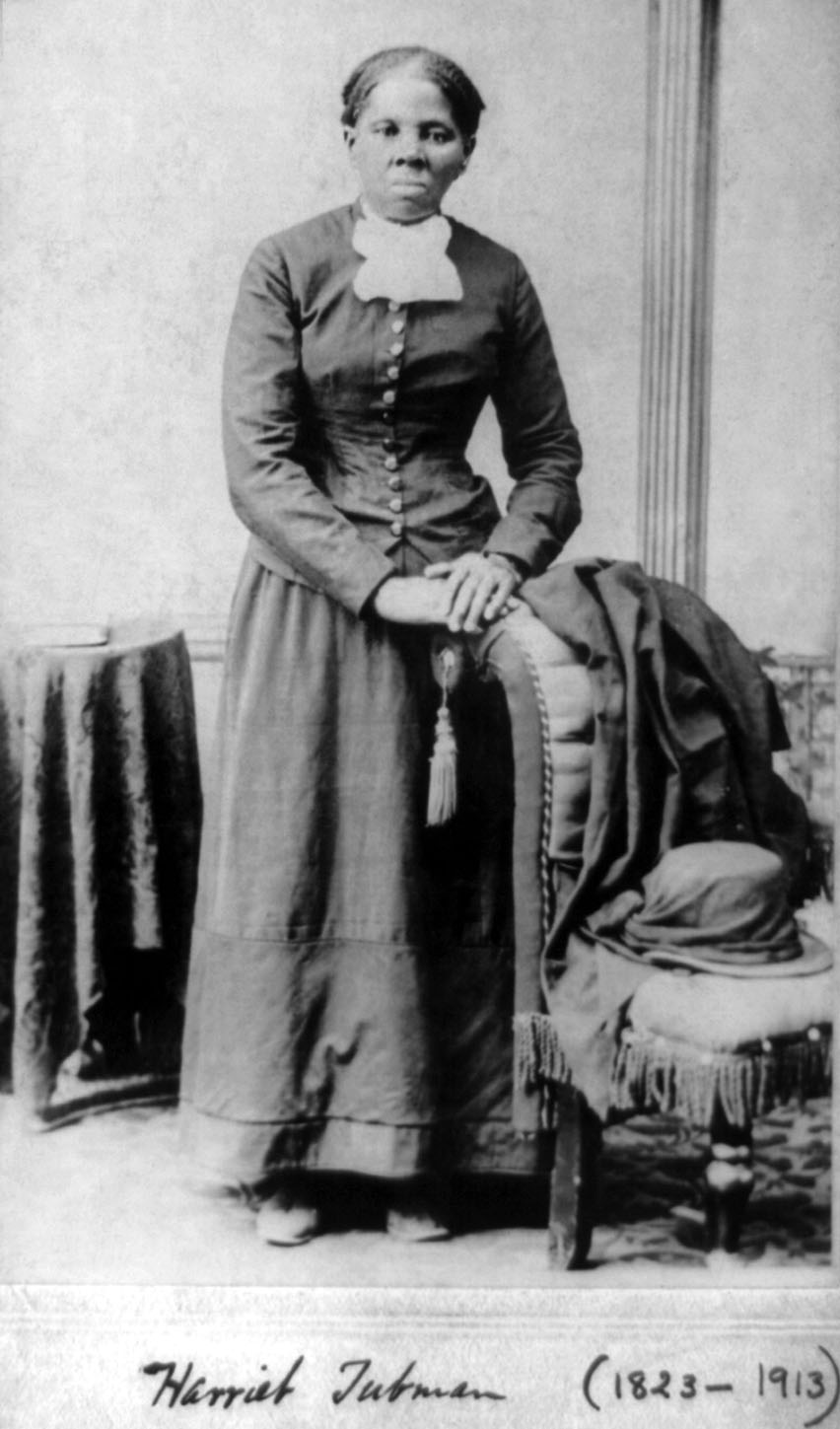
| Harriet Tubman Born Araminta Harriet Ross 1820 – March 10, 1913 Was an African-American abolitionist, humanitarian, and Union spy during the American Civil War. Born into slavery, Tubman escaped and subsequently made more than nineteen missions to rescue more than 300 slaves using the network of antislavery activists and safe houses known as the Underground Railroad. She later helped John Brown recruit men for his raid on Harpers Ferry, and in the post-war era struggled for women's suffrage. As a child in Dorchester County, Maryland, Tubman was beaten by masters to whom she was hired out. Early in her life, she suffered a severe head wound when hit by a heavy metal weight. The injury caused disabling seizures, narcoleptic attacks, headaches, and powerful visionary and dream experiences, which occurred throughout her life. A devout Christian, Tubman ascribed the visions and vivid dreams to revelations from God. |
| Henry David Thoreau July 12, 1817 – May 6, 1862 Was an American author, poet, philosopher, abolitionist, naturalist, tax resister, development critic, surveyor, historian, and leading transcendentalist. He is best known for his book Walden, a reflection upon simple living in natural surroundings, and his essay Civil Disobedience, an argument for individual resistance to civil government in moral opposition to an unjust state. Thoreau's books, articles, essays, journals, and poetry total over 20 volumes. Among his lasting contributions were his writings on natural history and philosophy, where he anticipated the methods and findings of ecology and environmental history, two sources of modern day environmentalism. His literary style interweaves close natural observation, personal experience, pointed rhetoric, symbolic meanings, and historical lore, while displaying a poetic sensibility, philosophical austerity, and "Yankee" love of practical detail. He was also deeply interested in the idea of survival in the face of hostile elements, historical change, and natural decay; at the same time he advocated abandoning waste and illusion in order to discover life's true essential needs. He was a lifelong abolitionist, delivering lectures that attacked the Fugitive Slave Law while praising the writings of Wendell Phillips and defending abolitionist John Brown. Thoreau's philosophy of civil disobedience later influenced the political thoughts and actions of such notable figures as Leo Tolstoy, Mohandas Gandhi, and Martin Luther King, Jr. |
| FAMOUS & INFAMOUS AMERICANS |

| ABOUT THESE PHOTOS: These Photos Have Been Restored to Their Original Brillance by the SteelCactus Foundation. |

Photo Antiquities Museum of Pittsburg
| 531 East Ohio Street Pittsburgh, PA 15212 (412) 231-7881 |
| THE ONLY MUSEUM LIKE IT IN THE U.S.! |
See photos like this in their original form!
Plus the largest collection of cameras anywhere!
Plus the largest collection of cameras anywhere!


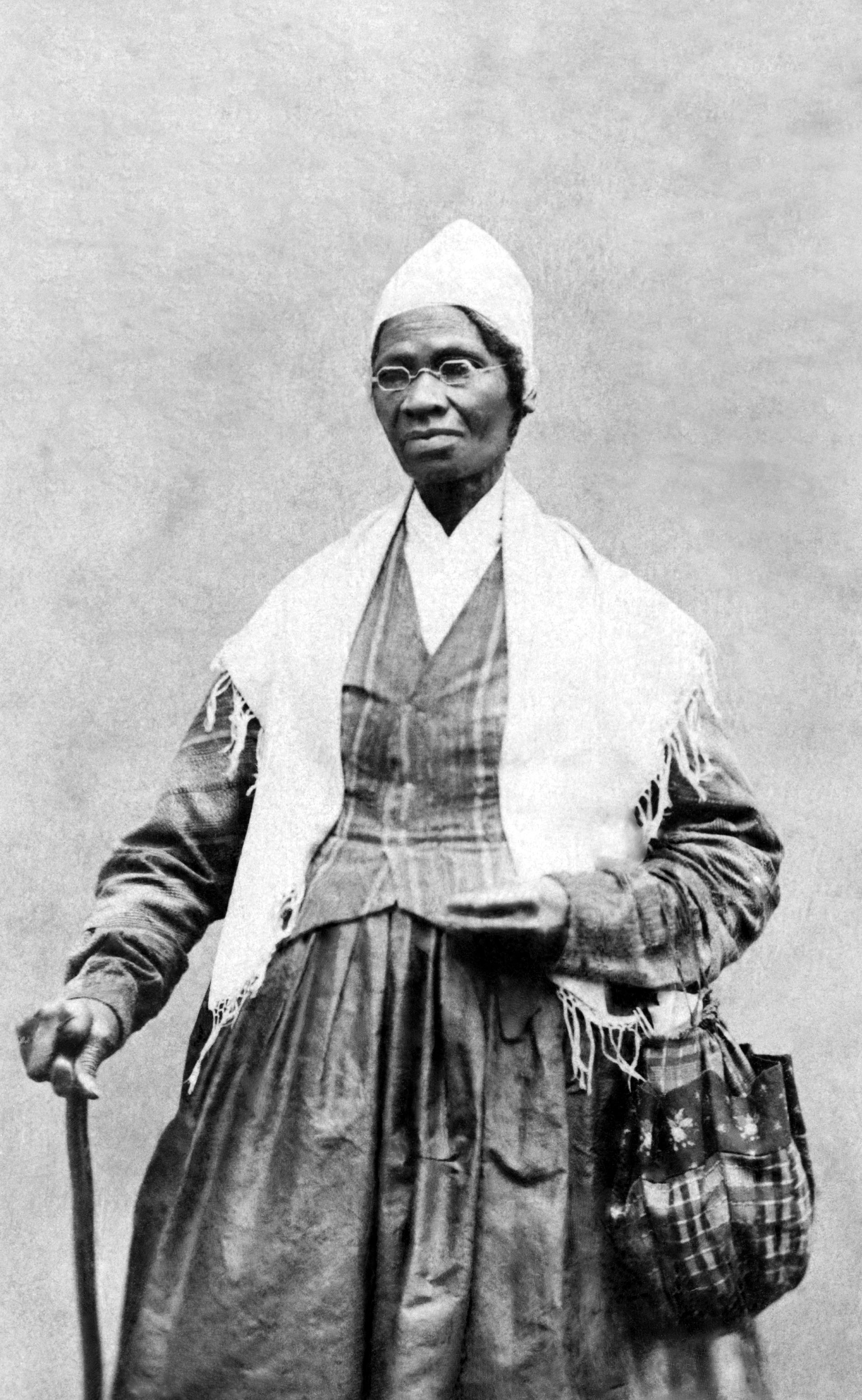
| Sojourner Truth Circa 1797 – November 26, 1883 Was the self-given name of Isabella Baumfree An African-American abolitionist and women's rights activist. Truth was born into slavery in Swartekill, Ulster County, New York, but escaped with her infant daughter to freedom in 1826. After going to court to recover her son, she became the first black woman to win such a case against a white man. Her best-known extemporaneous speech on gender inequalities, "Ain't I a Woman?", was delivered in 1851 at the Ohio Women's Rights Convention in Akron, Ohio. During the Civil War, Truth helped recruit black troops for the Union Army; after the war, she tried unsuccessfully to secure land grants from the federal government for former slaves. |